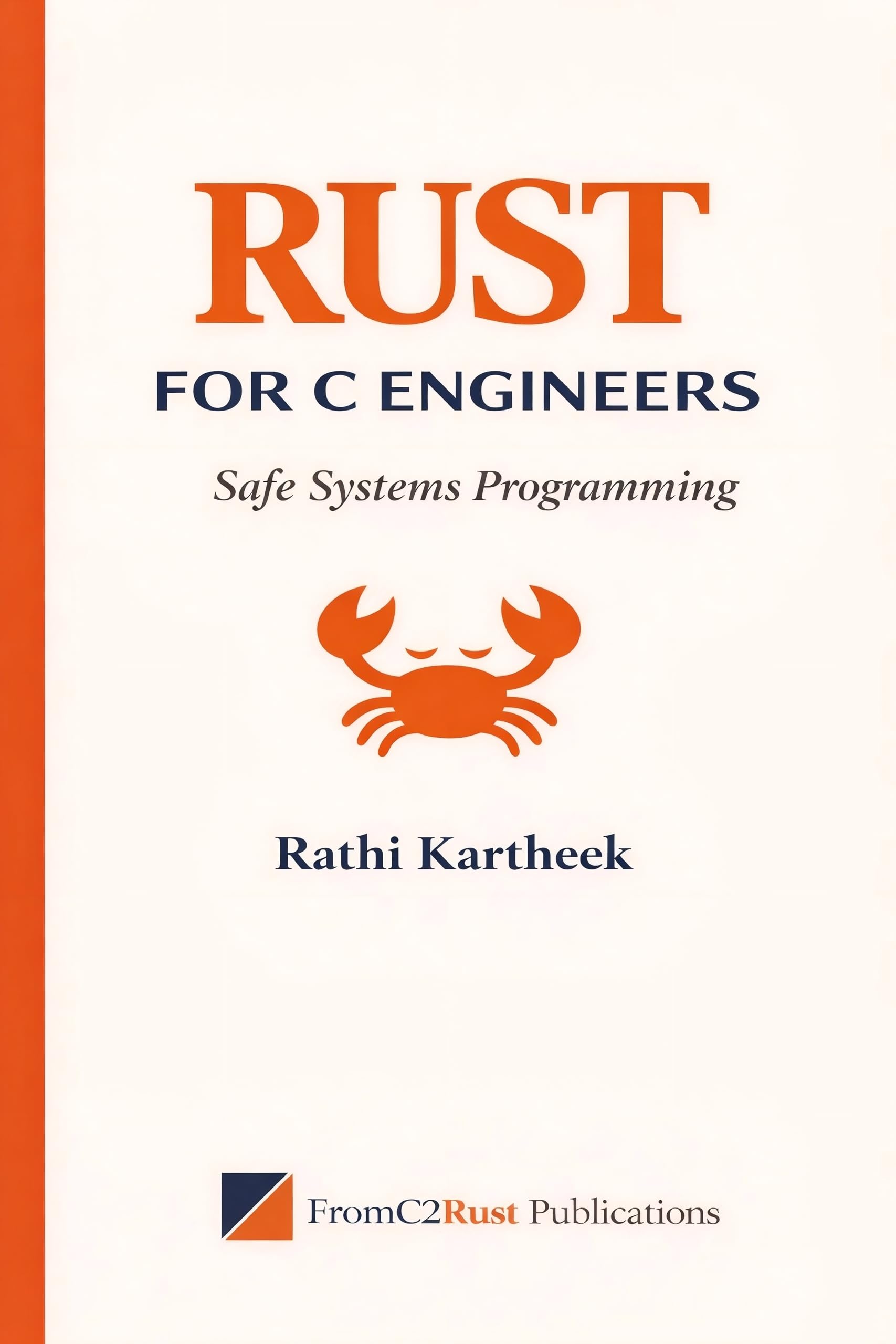
If you’re a C developer eyeing Rust with a mix of curiosity and hesitation, this book is the bridge you’ve been waiting for. As someone who’s spent years in the C trenches, I found “Rust for C Engineers” refreshingly practical—it doesn’t try to sell you on Rust with abstract promises but shows you exactly how your existing knowledge translates.
What I appreciate most is how the author approaches Rust through a C programmer’s lens. Rather than bombarding you with new concepts in isolation, it builds on what you already know. The book doesn’t just teach syntax; it rewires your systems programming mindset to embrace Rust’s safety guarantees while preserving that close-to-the-metal control we C programmers value.
The progression feels natural—you’ll start recognizing familiar patterns and seeing how Rust’s ownership model actually solves many headaches we’ve normalized in C (like those dreaded memory leaks and race conditions). Each chapter builds confidence systematically, rather than overwhelming you with Rust’s admittedly steep learning curve all concurrently.
For embedded developers especially, this book is gold. It acknowledges the reality that many systems can’t just be rewritten overnight, offering practical advice for gradual adoption and integration with existing C codebases.
What struck me most is that this isn’t just a language tutorial—it’s genuinely about engineering. The focus on long-term reliability and safety principles makes the content valuable even beyond the specific syntactic details. In an age where AI can help with code completion, understanding these foundational concepts becomes even more crucial.
Fair warning: if you’re looking for a quick syntax reference, this isn’t it. The book demands engagement with deeper systems programming concepts. But for C engineers wanting to future-proof their skills while leveraging their existing expertise, I can’t recommend it enough. The companion website (fromc2rust.com) adds extra value with examples you can tinker with immediately.
Bottom line: This is the resource I wish I’d had when I first attempted the C-to-Rust journey. It respects where you’re coming from while clearly illuminating where you’re going.