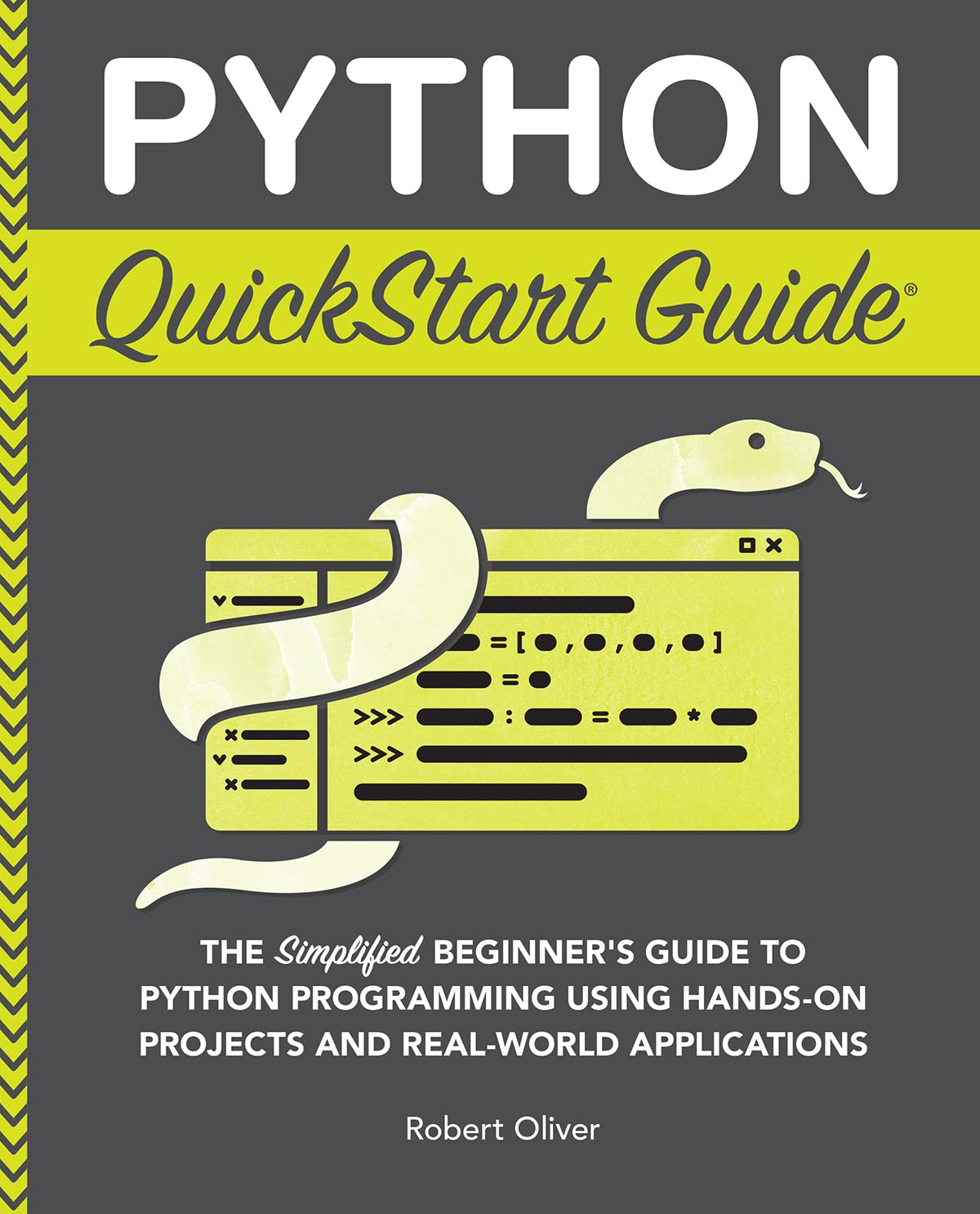
I just wrapped up “Python QuickStart Guide” and honestly, I wish I’d found this book sooner in my coding journey! Robert Oliver has somehow managed to make Python approachable without dumbing it down – no small feat for a programming guide.
What really sets this book apart is how practical it is. Instead of drowning you in abstract theory, Oliver walks you through building an actual game project. There’s something incredibly satisfying about seeing your code come to life while you’re still learning the basics. The QR codes scattered throughout that link to video explanations are genius – whenever I got stuck on a idea, having the author explain it visually made all the difference.
As someone who’s dabbled in coding before but never quite “got” Python, I appreciated how the book connects the dots between Python and real-world applications. Learning that the same language powers everything from Netflix to NASA makes the learning process feel worthwhile.
The section on object-oriented programming was particularly well done. It is usually where beginner books lose me, but Oliver breaks it down in a way that actually makes sense. And the GitHub integration? Chef’s kiss. Being able to compare my code to the repository when I got stuck saved me hours of frustration.
This guide is perfect if you’re:
- Completely new to programming but want to learn a useful first language
- A developer in another language looking to add Python to your toolkit
- Someone who wants to automate boring tasks in your current job
- Job hunting and need to add an in-demand skill to your resume fast
The free bonus materials aren’t just throwaway content either – the regex cheat sheet has already become a permanent tab in my browser! At 584 pages it is comprehensive without being overwhelming, and I keep finding myself referring back to different sections as I work on my own projects.
Fair warning though: you will actually need to code along to get the most out of this. It’s not a passive read-only experience, but that is precisely why it works so well. By the end, you’ll have not just knowledge but actual hands-on experience you can point to.
If you’re on the fence about learning Python or have been burned by overly academic programming books before, that is the guide that might finally make it click for you. Highly recommended!


