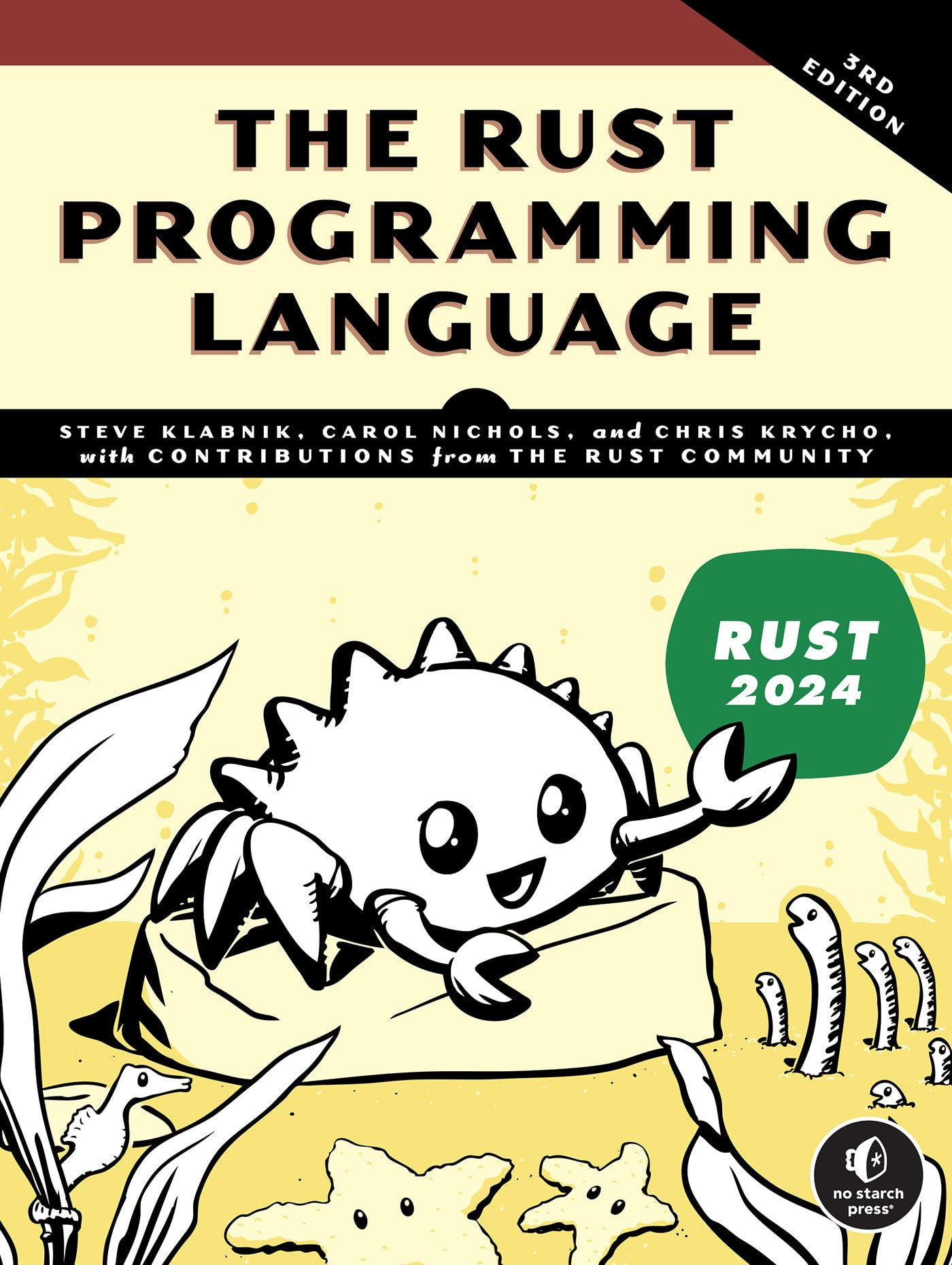
Oh hey, fellow code enthusiasts! I just got my hands on the upcoming 3rd edition of “The Rust Programming Language” from No Starch Press, and I’ve gotta say—if you’re looking to dive into Rust or level up your skills, that is definitely going to be worth the wait.
This hefty 624-page guide is essentially the Rust Bible. What I particularly love is how it walks you through concepts step by step without assuming you already know seventeen other programming languages. The book starts with the fundamentals but doesn’t shy away from the complex stuff that makes Rust truly special—ownership, borrowing, and lifetimes (you know, the things that make you question your career choices at 2 AM).
For beginners who are intimidated by Rust’s reputation for being difficult: this book does an excellent job demystifying those challenging concepts. The examples are practical rather than academic, which means you’ll actually remember them when you need to use them in your own projects.
If you’re coming from Python, JavaScript, or even C++, you’ll appreciate how the authors contextualize Rust’s approach to memory safety without sacrificing performance. They don’t just tell you what Rust does differently—they explain why it matters.
The 3rd edition appears to be bringing updates aligned with Rust’s evolution since the previous version. Considering how quickly Rust has been developing, these updates are crucial for anyone serious about mastering this language in 2026 and beyond.
Who should pick this up? Definitely grab this if you’re:
- A software developer wanting to add a systems programming language to your toolkit
- Looking to build high-performance, memory-safe applications
- Interested in WebAssembly development
- Working on projects where security is non-negotiable
- Tired of debugging segmentation faults in your C++ code
Fair warning though—this isn’t a quick weekend read. It is comprehensive and designed to be worked through with code examples. You’ll want to set aside dedicated learning time to really absorb what it offers.
The No Starch Press quality shines through as always. Their technical books consistently strike that perfect balance between depth and accessibility, and this looks to be no exception. Excellent return on investment for anyone serious about learning what many consider to be the future of systems programming.