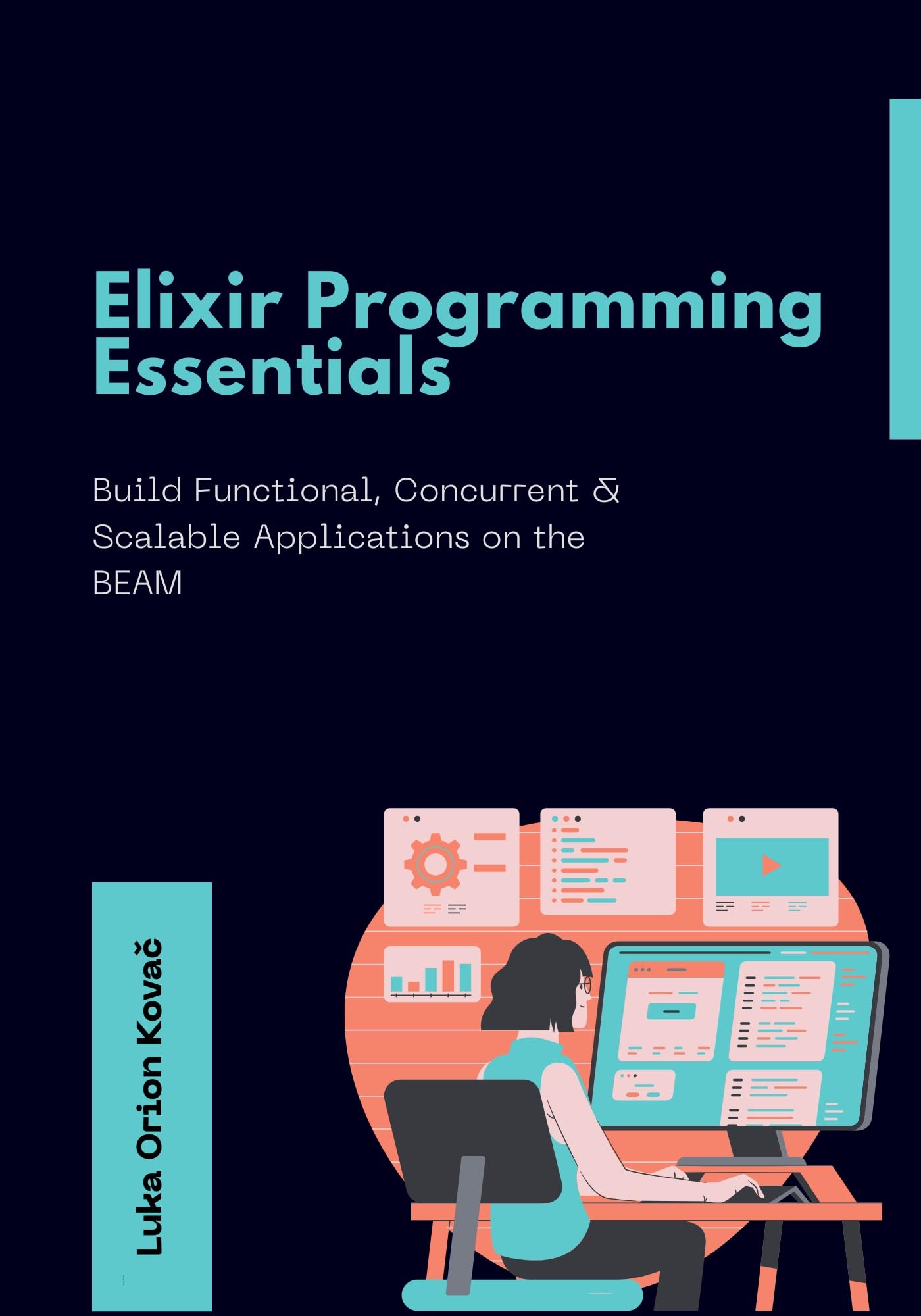
I’ve been diving into various programming languages over the years, and let me tell you—Elixir has been on my radar for a while, but finding the right resource to actually learn it properly? That is been the challenge. “Elixir Programming Essentials” might just be that missing piece.
What immediately caught my attention is how this book doesn’t just teach you syntax—it teaches you to ponder in Elixir’s functional paradigm. If you’re coming from an object-oriented background like I did, this mental shift is important, and the book seems to address this head-on with its clear explanations of immutability, pattern matching, and pipelines.
The structure is particularly appealing for those of us who learn by doing. Rather than drowning you in theory before you write a line of code, it gets you building real applications from the beginning. This practical approach means you’re not just memorizing concepts—you’re applying them immediately.
Where this book really shines is its coverage of concurrency and OTP (Open Telecom Platform). These are Elixir’s killer features, but they can be intimidating. The breakdown of lightweight BEAM processes, GenServers, and Supervisors makes these powerful concepts accessible even if you’re new to concurrent programming.
For web developers, the Phoenix framework coverage is a major plus. I’m particularly intrigued by the LiveView sections—building reactive UIs without JavaScript? That is something I need to see in action. The promise of creating dynamic dashboards without the usual front-end complexity sounds almost too good to be true.
What sets this apart from other programming books is its emphasis on production-ready skills. Too many tutorials leave you hanging when it comes to actually deploying what you’ve built. The sections on logging, observability, performance optimization and deployment strategies mean you’re learning the complete lifecycle, not just the fun coding parts.
This book would be ideal for several types of developers: backend devs looking to level up their toolkit, anyone building systems that need high reliability or concurrency, and even JavaScript developers curious about a completely different approach to building web applications.
Fair warning though—at 266 pages, it won’t make you an Elixir expert overnight. But it seems to provide exactly the foundation you need to start building real, meaningful applications while understanding the “why” behind Elixir’s design decisions.
If you’ve been curious about functional programming or heard developers rave about Elixir’s elegance and performance, this looks like your comprehensive on-ramp to join that conversation. Just be prepared to have your mind expanded in the process!


